Thresholds
A few nights ago at Lore, a woman stood at the edge of the cold plunge for a long time. What she was facing was crossing a threshold.
Thresholds
A few nights ago at Lore, a woman stood at the edge of the cold plunge for a long time. Not dramatically. Not making a scene. Just standing there, hands on the railing, staring into the water.
People do this often. You can almost see the conversation happening inside them. One voice says: go. Another voice says: not yet.
She dipped one foot in, pulled it out, laughed a little, shook her head. Then after a few minutes she looked up, took one breath, and stepped in. Fully.
Three to ten seconds later the shock passed. Her shoulders dropped. Her breathing slowed. When she got out a few minutes later she said something: 'Honestly… the hardest part was getting in.'
She was right. What she was facing was crossing a threshold.
What Is a Threshold?
The word comes from Old English: therscold — the piece of stone or wood at the base of a doorway. The strip you step over when moving from one room into another.
A threshold is not a wall. A wall stops you. A threshold invites you — and waits to see if you'll accept.
Every threshold has the same anatomy: The approach — you see it coming. The edge — the moment of decision. The crossing — the point of no return. The other side — which is never quite what you imagined.
The Three Kinds of Thresholds
Physical thresholds — Where the body meets real risk. Cold water. Fire. Height. The ocean at night.
Psychological thresholds — Where the self meets its own resistance. The conversation you keep almost having. The decision you keep almost making. The truth you keep almost telling.
Existential thresholds — Where a life meets its own meaning. Birth. Death. Grief. Love. The moment you realize who you are.
In heat and cold something interesting happens. All three collapse into one. Which is part of why the practice is so powerful.
What All Thresholds Share
First, you see it coming. The approach is visible. You have time to think. That thinking is often the hardest part.
Second, the crossing cannot be partial. You are in or you are out. There is no half-threshold.
Third, something is lost. A version of yourself. A certainty. A comfort. Something that cannot come with you.
And finally, something is gained that could not have been gained any other way. The other side always holds something the approach never could.
The Cold Plunge
Against all of this — wars, births, oceans, mountains — the cold plunge seems small. And it is. That's exactly why it works.
It is a threshold you can practice. A crossing with no permanent consequence. A moment of real physiological resistance that you can move through again and again.
It makes the threshold familiar. It teaches the body that the space between knowing and doing is crossable. That the voice saying not yet can be acknowledged… and gently set aside.
And over time something interesting begins to happen. You stop fearing the doorway. You start recognizing it. In conversations. In decisions. In moments where life quietly asks something of you.
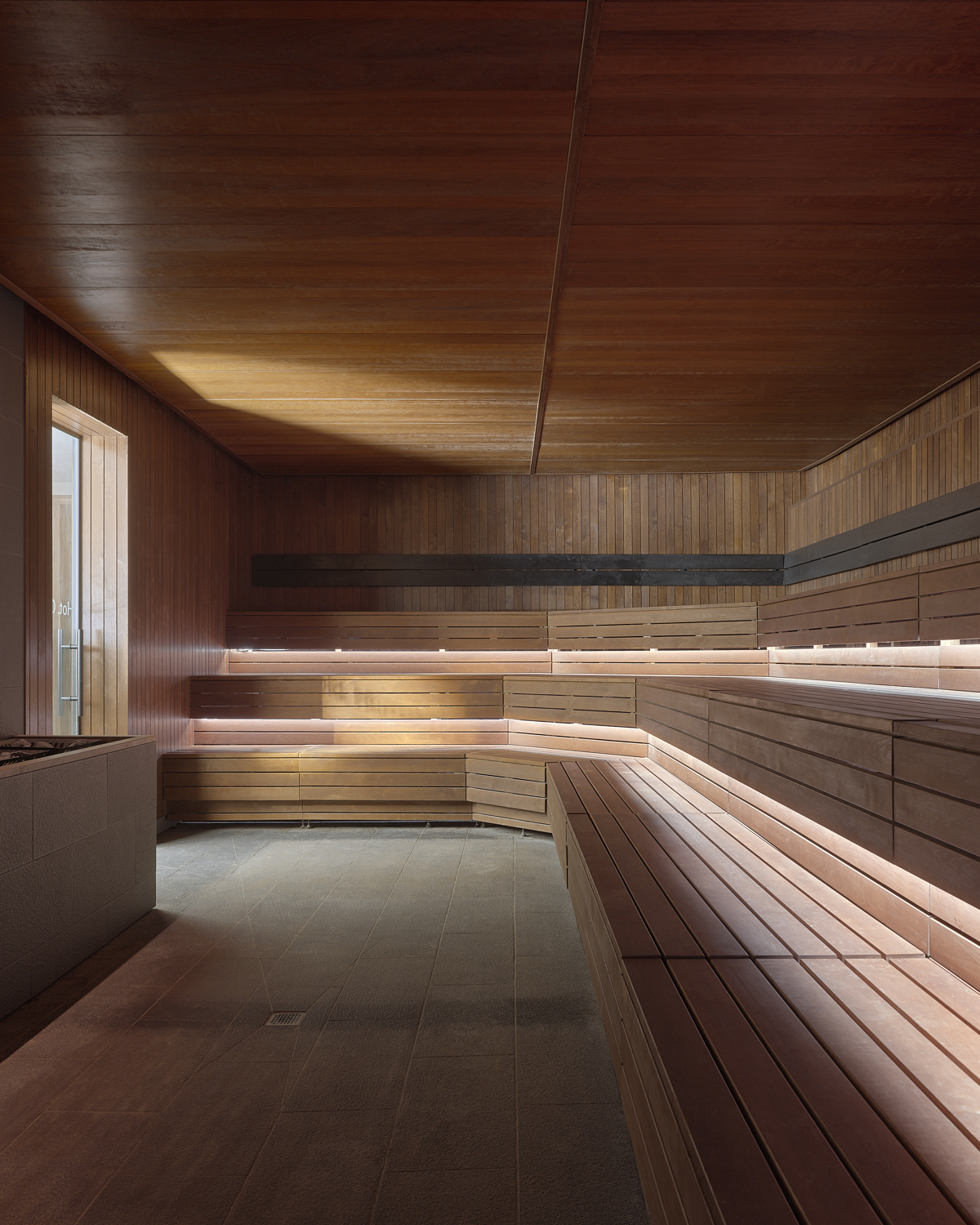
At Lore we practice this in the simplest possible way. Hot. Cold. Breath. Step in. Step out. Step back again. Nothing heroic. Just a reminder the body never forgets: the edge is not the end. It is the beginning.