How to Cure Jet Lag
Jet lag is a circadian rhythm problem. The body's internal clock is calibrated to the time zone you left.
How to Cure Jet Lag
You land. The city outside the terminal window is the wrong shade of light -- too bright, or already dark when your body insists it should be noon. Your legs are heavy. Your thoughts arrive half a second late. You are here, but not quite.
Jet lag is not just tiredness. It is a desynchronization -- your circadian rhythm, your cortisol curve, your melatonin release, all running on a clock set to a city you left twelve hours ago. The body is not confused. It is simply loyal to the last signal it received.
The good news: we can give it a new signal. A fast one.
The Science of Resetting
Your circadian clock is governed by the suprachiasmatic nucleus -- a small cluster of neurons in the hypothalamus that responds to light, temperature, and social cues. Most jet lag advice focuses on light. But temperature is equally powerful.
Thermal contrast -- deliberate exposure to heat followed by cold -- triggers a cascade of physiological responses: cortisol normalization, melatonin recalibration, and a sharp reset of the autonomic nervous system. The body experiences heat and cold as time-stamped events. Used correctly, they tell the body: this is now. This is where we are.
The Finnish have known this for centuries. The post-flight sauna is not folklore. It is functional.
The Protocol
Step one: Hydrate before anything else. Flight cabin air is aggressively dry. Drink one liter of water with electrolytes. This is not optional.
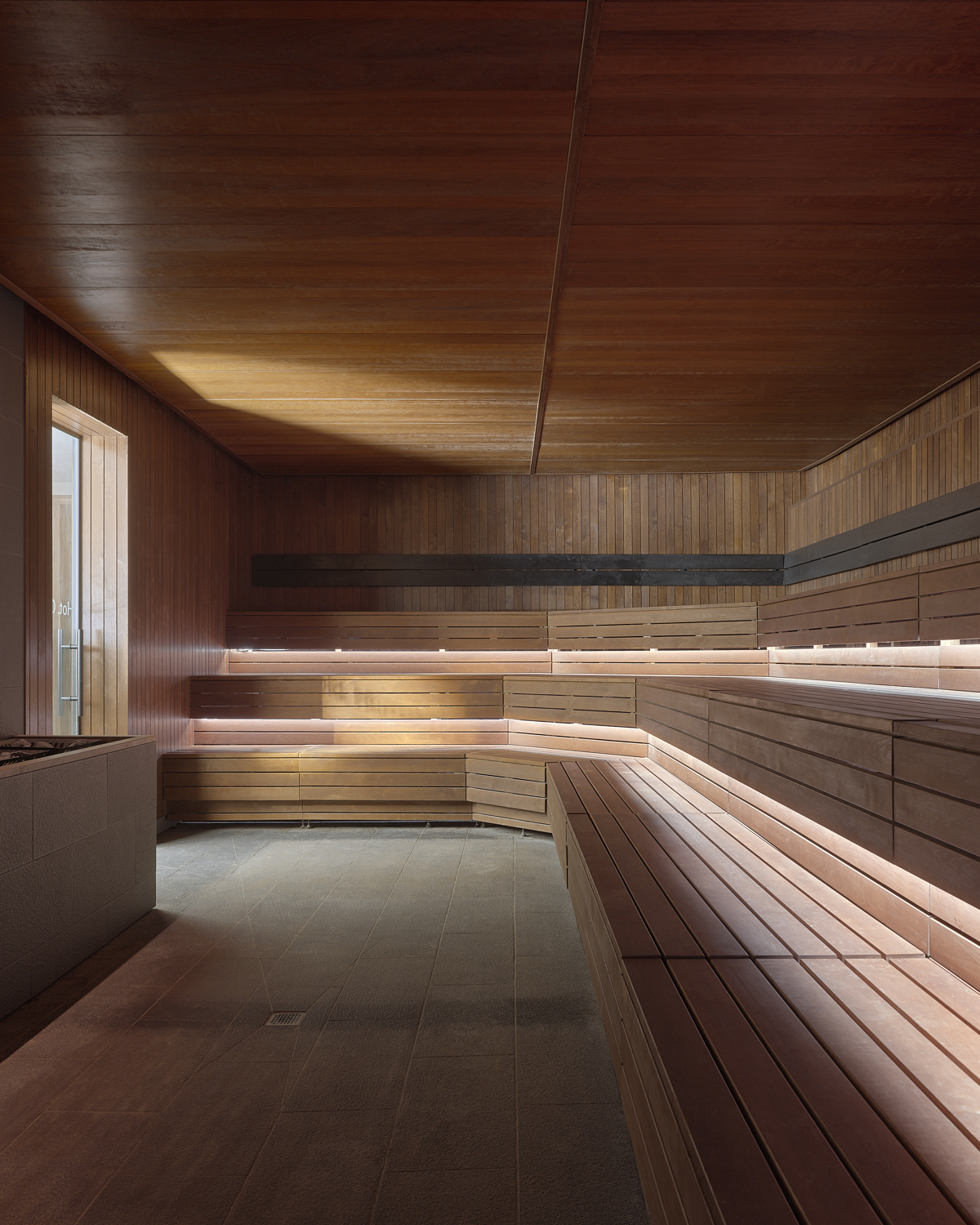
Step two: Enter the sauna. Fifteen to twenty minutes at high heat -- ideally above 180F. Let the body sweat. The heat increases circulation, loosens the muscles that have been compressed in a seat for hours, and begins to shift the cortisol response.
Step three: Cold immersion. Not a cool shower. Cold. A plunge pool or cold shower at its lowest setting. Sixty seconds minimum. This is where the reset actually happens -- the cold triggers a massive norepinephrine surge, sharpens alertness, and begins synchronizing the nervous system to local time.
Step four: Rest in the transition. Between rounds, sit. Let the body float between temperatures. The nervous system is recalibrating.
Step five: Repeat two to three times. The full protocol takes sixty to ninety minutes. By the final round, most people notice their thoughts arriving on time again.
Step six: Eat something real, then sleep. A protein-forward meal after the session supports recovery. Sleep will come faster than you expect.
What to Avoid
Do not drink alcohol on the plane and call it relaxation. Alcohol disrupts sleep architecture and will deepen the jet lag.
Do not try to push through with caffeine alone. You are desynchronized. More stimulation does not solve desynchronization.
In New York
Lore Bathing Club, at 676 Broadway in SoHo, is the most complete version of this protocol available in the city. High-heat sauna, cold plunge pool, and the space to actually rest between rounds. No timers, no classes, no performance.
You landed. Now arrive.